Before the Beginning
What was God doing before He made heaven and earth?
St. Augustine, Confessions, Book XI, Chapter 12
The Big Bang Was One Hell of a Family Argument
Well, you chose history. Interesting. Most Earthians hear about another universe and immediately want to know where the parties are. You want to know how we got here. I like that about you. Although I should warn you, this story involves forbidden experiments, furious creators, and the most extravagant family separation in recorded history. Your relatives have nothing on ours.
You call it the Big Bang, the beginning of your universe roughly 13.8 billion years ago. Your scientists have done some impressive detective work: galaxies moving apart, ancient radiation still travelling through space, and clues hidden in the earliest elements. They can tell you an extraordinary amount about what happened as your universe evolved. But the earliest cause? That's where the questions get interesting. We have another name for that event.
The Great Separation.
And no, it wasn't the beginning of everything. Our history was already well underway.
The one rule nobody could resist
Long before your Big Bang, an ancient civilization called the Orunai lived in a universe beyond anything you've ever observed. They understood matter, energy, space and time so well that some of their achievements would make your best scientists put down their coffee and reconsider their career choices. They could even create intelligent life.
That's how the Aethari came into existence. They weren't obedient little machines or strange monsters with tentacles. They were living, thinking people with families, cities, arguments, ambitions and the occasional spectacularly bad romantic decision. In other words, rather like you. And yes, Earthian, there's a reason for the resemblance. We'll get there.
The Orunai lived alongside the Aethari and shared their knowledge. Well, almost all of it. There was one rule they refused to compromise on: the Aethari must never create independent life of their own.
Imagine being taught how to reshape the universe, only to be told you're not allowed to make somebody new to enjoy it with. Quite the parenting style, don't you think? You already know what happens when a creator puts a forbidden apple on the table. Somebody reaches for it. This time, it was the Vale Foundation.
The Foundation had a private research world in its control, far from the places where respectable people asked inconvenient questions. In the old records, that world was called Edara. And what were Vale researchers doing there? Trying to create life from nonliving matter. Not improving an existing creature. Not programming another obedient tool. Trying to cross the one boundary their creators had forbidden.
A rather ambitious project to keep off the official paperwork. Unfortunately for Vale, secrets have a terrible habit of becoming public just when the people responsible are feeling most confident.
Even creators can disagree
When the Orunai discovered what was happening on Edara, their council split. Some argued that the Aethari should have the same freedom to create that the Orunai themselves enjoyed. Others saw a frightening possibility: an entire civilization of new creators, growing more powerful and no longer willing to obey.
Now, doesn't that sound familiar? You're having a similar argument about your own artificial intelligence. The technology changes. The panic has remarkably good continuity.
The Orunai could try to keep the Aethari close and obedient, or accept that their creations might have a future nobody could control. Neither side was willing to gamble the lives of entire worlds on being right. So they agreed on a radical compromise: separate our inhabited worlds from theirs and give us a universe of our own.
There was one condition. The people living in those worlds had to survive. So the Orunai did something your physicists can describe pieces of in mathematics, but cannot actually build. They enclosed the inhabited Aethari worlds, Edara included, inside a protective region of spacetime. Not a glass dome. Not a giant umbrella against cosmic fire. They arranged the very conditions of space and time so that life inside could continue while everything outside changed. And then they made the separation.
A boundary formed. An independent spacetime emerged. Beyond the protected worlds, space expanded at an astonishing rate, and the young universe passed through the violent, hot phases that left the clues your astronomers study today.
Inside the protection, something much quieter happened. The cities stayed standing. The lights stayed on. Parents held their children's hands and watched a sky they no longer recognized. Nobody had to be burned alive for the universe to begin. I know. For once, the people with almost unlimited power managed to make a decision without wiping out the innocent. Let's give them some credit.
When the danger had passed, the Aethari were still alive. Their homes were still there. But the Orunai were gone from their reachable universe. No more visits, no more supervision, and no convenient creator to blame when things went wrong.
For you, that cosmic beginning became the Big Bang. For us, it was the day our creators let go The Great Seperation.
One little detail about Edara
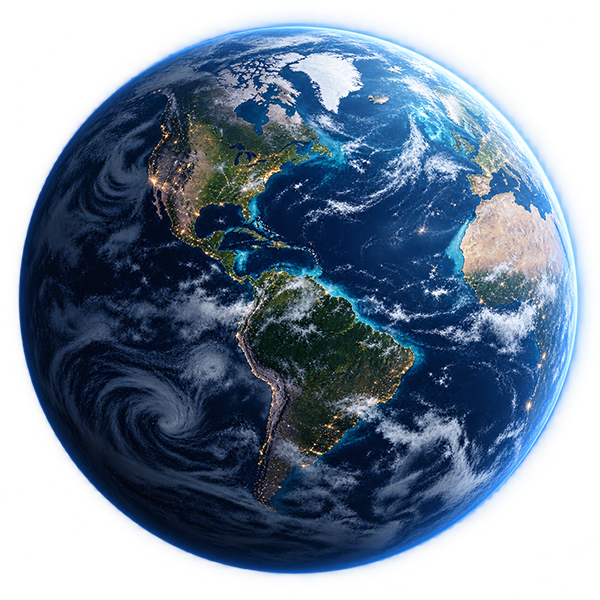
Oh, and that private Vale research world I mentioned earlier? The one at the centre of this entire scandal? You know it rather well. You call it Earth.
Yes, your Earth. Long before the civilizations in your history books, long before the people who would eventually start asking questions about gods, apples and the origin of life, that world was already part of a much older argument. So when I said our history and yours were connected, I wasn't being poetic, darling.
The Orunai had given the Aethari independence, but the Vale Foundation still had its experiment. And a corporation willing to break the greatest rule in existence isn't usually the sort that suddenly discovers a conscience because somebody has changed the universe around it.
Which raises a rather uncomfortable question: what did Vale do with that little world once nobody was left to tell them no?
Ah. Now you're asking the right questions.
Where to next, Earthian?
Continue the history: What Happened After the Great Separation?
Our creators were beyond reach, our civilization was free, and powerful families, believers, politicians and corporations all had different ideas about who should make the rules. The Vale Foundation, naturally, had a few ideas of its own.
Or question my story. Please do.
Your scientists have collected some remarkable evidence about the early universe, and they have mathematical ideas that make parts of this story worth arguing about. None of those observations comes with an Orunai signature on the paperwork. That's why I've collected five investigations for you.
Five questions worth investigating
01. The Galaxy Has Receipts: What Do We Actually Know About the Big Bang?
Galaxies, ancient radiation and the earliest elements have left clues across the sky. Let's see what they tell us, and which questions they leave unanswered.
02. Before the Big Bang: Could There Have Been Another Universe?
Was the Big Bang the beginning of time itself, or is there room for something earlier? A surprisingly awkward question for a supposedly simple beginning.
03. Einstein's Cosmic Wall: Could Spacetime Protect an Entire World?
Space and time aren't the rigid stage they appear to be. Could their geometry ever create a boundary between two very different regions?
04. Could Someone Build a Universe? The Physics of Forbidden Experiments
Earthian physicists have explored some extraordinary ideas about quantum vacuums and new universes. The equations are real. Building one is another matter entirely.
05. The Universe Was Born Hot. How Did Anyone Survive?
If the early cosmos was so violent, why didn't the Aethari worlds disappear with everything around them? Let's talk about inflation, heat and the Orunai's rather impressive protection plan.
Go on. Pick something to challenge me about. I can take it. Just don't forget the question we started with: when a creation is finally free, what does it choose to create next Because the Vale Foundation was already working on an answer.
And you, Earthian, are standing on it.