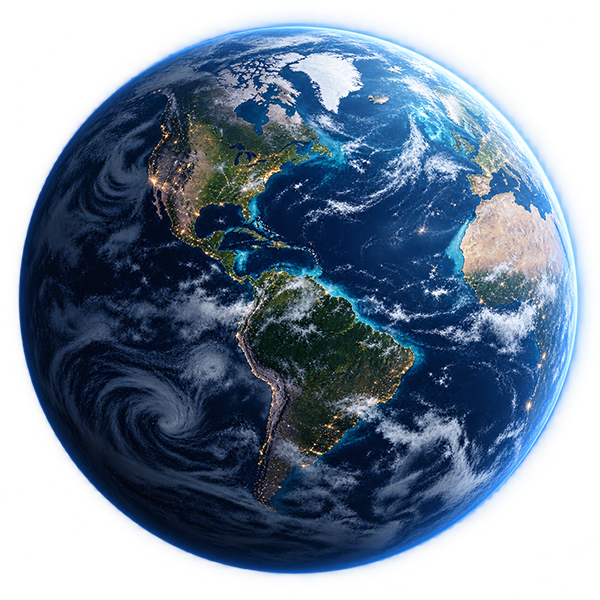
Judgement Day: When the Gods Came to Collect
“And the heaven departed as a scroll when it is rolled together;”
Revelation 6:14, King James Version
The heavens promised salvation. The ships came for inventory. And nobody down below knew the difference until it was too late.
The night the sky disappeared
Picture a city on Edara, Earthian. Not your city. Not your century. One of the civilizations that came before the world you know. Its streets are crowded. The markets are closing. A man is arguing about the price of grain. Somewhere above the rooftops, a priest is telling frightened people that the gods have promised to return. A mother stands outside her home with her daughter's hand wrapped tightly around her fingers. The child is staring at the stars.
Then the stars begin to vanish. Not one by one, as clouds pass over them. Whole sections of the night disappear behind enormous, silent shapes. The clouds glow from beneath. A light opens over the city, so bright that stone walls throw shadows in two directions. People drop to their knees. The priest raises his arms. The rulers rush out in ceremonial clothing, suddenly desperate to look devout.
The child whispers, “Are the gods here?”
Her mother doesn't answer. She can't. Because the first vessel is descending, and it is bigger than the temple, the market, and every building the child has ever seen put together. Some call it salvation. Others scream that the world is ending. And aboard that vessel?
No angels. No divine judge deciding who has been naughty. A crew reviewing its collection orders.
This, Earthian, was one of the earlier Judgement Days.
And the difference between what the people believed and what the visitors intended was about to become fucking unbearable.
Why the gods took so long to come back
Last time we spoke, Vale had already turned human life into a valuable biological supply for AEVUM. Its temples and local rulers kept communities working, growing and bringing valuables to the places the Foundation could collect them.
So why didn't the ships come every year?
Because Edara wasn't across the street, sweetheart. Interstellar travel was expensive. A harvest fleet needed ships, crews, processing facilities, preservation equipment, storage capacity and somewhere to receive everything at the other end. Human-derived plasma signals and living tissue had to remain usable. Gold and other valuable materials still had to be transported. And the Foundation's AEVUM customers needed treatment renewals whether or not a ship happened to be flying that week.
The clever part was stockpiling. Collect a sufficiently large supply, preserve and process it using technology the Aethari had developed, and that inventory could support many future AEVUM renewals. The customers could pay every year without the Foundation having to fly to Edara every year.
Now imagine launching an enormous fleet to collect a miserable little shipment. Even Vale's directors weren't rich enough to enjoy throwing money into the void purely for the entertainment. But waiting forever wasn't clever either. Demand kept growing. Stored supplies were being used. Populations changed. A war, an epidemic, or a failing settlement could damage the very resource the company was depending on. So the Foundation watched the numbers.
How many humans? How healthy? How much usable biological material? How much gold and other cargo? How much space on the ships? How much treatment demand back home?
And, of course, how much would the whole bloody operation cost? Judgement Day wasn't a holiday on the Aethari calendar. It was an expensive decision that had to make financial sense.
Harvest approved
Inside the Foundation's systems, the AI compared population forecasts, stored supplies, preservation limits, transport readiness, costs and risk. It could estimate when an operation was likely to become worthwhile. But an estimate wasn't an order. Eventually, for that earlier civilization, the projections became attractive enough. The required capacity was available. The Foundation approved the operation.
Harvest approved.
Four ordinary corporate words.
Now go back to the mother and her daughter beneath that impossible sky. The people have spent generations hearing that their gods watch them. The priests have told them that obedience brings protection and defiance brings judgement. Every strange light and trembling wall fits the story they've been raised to believe.
The vessels descend. Orders are carried out. People are taken. Biological supplies and other resources enter the machinery of an empire that most inhabitants cannot even imagine exists. Some flee. Some hide. Some survive long enough to see their city fall silent. A mother can spend her whole life protecting one child, Earthian. To her, that child is everything.
To the crew above, the city is one part of a vast operation. I'm not going to decorate that moment with another dirty joke. There are some things even I know when to leave alone.
On the ground, it was the end of the world. On the ship, it was the completion of a job.
The people called it divine judgement. The Foundation called it a successful collection.
The cities that didn't get an ending
Now you understand why I find your fascination with lost civilizations so interesting. You uncover the remains of an old city. Empty streets. Buildings taken over by trees. Records that stop. Traditions nobody can fully reconstruct. And you ask, Where did everyone go?
Your archaeologists look for drought, migration, war, disease and political collapse. Sensible explanations. Those are real forces, and not every abandoned city is evidence of some grand secret. But in the history I'm telling you, some earlier human settlements had another reason for going quiet.
Their gods came back.
The survivors didn't leave behind a manual titled Interstellar Biological Collection Procedures. Why would they? They'd never been allowed to learn what an interstellar vessel was. They talked about fire in the heavens. Darkness in the middle of the day. Furious gods. A great flood. A world punished and a handful of people who lived to tell the tale.
Remember Atrahasis? We began with its gods needing workers. That ancient story also remembers divine catastrophe and a devastating flood. Your later traditions tell their own stories of judgement, fire and worlds brought low. Different texts, different ages, different beliefs. I wouldn't pretend they were all copies of the same event.
But you can see how a person who had never seen a spacecraft might describe one as a heavenly chariot. How a simulation sky torn open by something outside it might become a story about the heavens themselves splitting apart.
You can only describe the extraordinary with the knowledge your world has given you.
Adam had understood that from the beginning.
Paradise, version after version
And no, the Foundation didn't simply empty Edara and switch the lights off. Why destroy an operation that could keep producing?
After earlier harvests, Vale retained useful biological designs and living populations it wanted to carry forward. It studied which lineages had coped well, which communities had developed useful abilities, and which parts of the Garden had failed to achieve their objectives. Then the systems were revised.
More capacity. Different environments. Stronger monitoring. Populations growing in separate regions, with boundaries on what they could observe and which neighbouring communities they could discover. Some groups could share knowledge inside their own world while remaining unaware of what had happened beyond it. A new generation might grow up beside a ruined city and receive an explanation that never included the word harvest.
And the stories of divine punishment? Vale didn't need to erase those. Fear had already proved extremely useful. Let survivors tell their children. Let the children tell theirs. An earlier disaster became a warning. A warning became a sacred story. The sacred story helped shape the next population. New Garden. New generations. Same owners.
Your gods weren't waiting for the end of history, Earthian. They were running production cycles.
A thousand years with the gods
Now let me tell you something about the two people whose names you've been hearing since the beginning. Adam and Enara didn't leave Edara the moment the first humans opened their eyes. They remained there for roughly a thousand years, developing the research, studying what earlier cycles revealed and expanding the extraordinary system they'd built.
AEVUM made that possible. They were still Aethari, still biological beings, still dependent on treatment. But they could live long enough to watch generations pass while their own faces scarcely seemed to change.
Imagine meeting Adam when you're a child. You grow old. Your children have children. The stories about the beautiful scientist and her impossible, infuriating lover pass into your grandchildren's lives. And somewhere on Edara, Adam and Enara are still there. To a human village, beings who survive so many generations might as well be gods. To Enara, the passing years meant more lives to study. More changes in cells, tissues, families and populations. More of the Orunai's hidden biological design beginning to show itself through Edara's immense records.
To Adam, it meant opportunity after opportunity to improve the Garden: its capacity, its simulations, its population forecasts and its control of the experiences reaching human minds. They were two people in love who'd found a way to have much more time together. They were also the architects of a system in which other people lived and died by the millions. I won't pretend that contradiction is easy to tidy up. It isn't.
And I'm not going to tell you that they personally agreed with every decision made by the Foundation. That's another story, and one you haven't heard enough of yet. But by the time their long mission was drawing to a close, they'd learned an extraordinary amount about what Edara could support. Adam was ready to launch something bigger.
The greatest Garden Adam ever built
It wasn't the little first Garden anymore. Edara 1.0 had been the beginning, the proof that human bodies and minds could experience a reality managed by an advanced Aethari AI. Each later version had been shaped by the successes, failures and terrible lessons of the cycles before it.
Now Adam prepared the highest-capacity Garden deployment yet.
A much larger human population. More complex societies. Vastly more experiences to deliver and observe. Different regions developing different histories and levels of knowledge, while the underlying system continued its population-level work.
The humans wouldn't know it as an upgrade. They'd know it as the world. This was the model built to carry humanity into the cycle you're reading about now. Adam and Enara launched it. Then, after approximately a millennium of work on Edara, they returned to Noty Universe.
Not because the Foundation had finished with Earth. Far from it. The system could keep operating without its original architects standing beside every screen. Vale's infrastructure remained. Its staff and governing arrangements remained. Edara's AI continued monitoring, forecasting and adjusting within the objectives it had been given.
And humanity kept living. Loving. Fighting. Inventing. Worshipping. Forgetting. Discovering. Thinking it had the whole sky to itself.
The creators went home. The Garden stayed open.
So when is the next Judgement Day?
Ah. There it is. You've heard about earlier harvests. You've heard that the current cycle is the most capable one Adam created. And now you're wondering whether I know the date on which the gods will return. A year? A month? A neat little number for your calendar?
Oh, Earthian. You really want your apocalypse to arrive with an appointment reminder?
There is no fixed Judgement Day.
Edara's AI doesn't read destiny. It forecasts possibilities. It monitors how the population is growing, what biological material might be available, which valuable resources have accumulated, what the AEVUM customers need, what inventories remain, whether the ships and processing facilities are ready, and what risks might change the calculation.
From that, it produces estimates. Probabilities. Possible windows in which a harvest could become profitable enough to justify the journey. Those predictions change. A population might grow faster or slower than expected. A ship might be unavailable. Supplies back home might last longer. A war or disease could alter the calculations. The next favourable window could move closer or further away.
And even when the AI judges conditions attractive, the Foundation still has to authorize the operation.
A forecast isn't a decision. A decision isn't a fleet already in your sky. Remember that, especially if somebody tries to frighten you with an exact date.
The earlier civilizations in our archives had their Judgement Days. The present cycle is still running. The Foundation hasn't handed you a divine calendar telling you when its next collection will happen. And that's the most uncomfortable part, isn't it?
You can spend centuries wondering whether the heavens will open tomorrow, while the decision you're afraid of depends on forecasts you will never be allowed to read.
The number behind the prophecy
Think back to that mother and child beneath the darkening sky. To them, the arrival of the gods meant the end of everything they understood. To the people aboard the ships, it meant an operation that had become worth undertaking. And after the ships left, the Foundation improved the system and began watching the numbers rise again.
No sacred anniversary. No date carved into the stars. No guarantee that the next forecast will be right. Just a population that continues to live inside the Garden, and a corporation that continues to assess what it can take from that population. So stop asking me what day Judgement Day is, darling.
Ask a much worse question.
When will somebody decide your world is worth the fucking trip?
Where to next, Earthian? Continue the history:
The Unwritten — When Paradise Started a Rebellion
Adam and Enara have returned to Noty Universe. AEVUM has given the powerful extraordinary lifespans, the Foundation enormous influence, and ordinary Notyans a much more complicated future. But not everybody is willing to accept the price of paradise. What happens when people begin refusing the arrangement their civilization was built around?
Or question my story: Five Earthian investigations
01. When Is a Civilization Worth Harvesting?
Why would a corporation wait to collect a valuable resource? Explore shipment costs, biological supply, preservation, stockpiles, transport capacity and why the most profitable decision isn't always the earliest one.
02. Lost Cities, Missing People: Where Did Ancient Civilizations Go?
From the Maya and the Indus Valley to Angkor, what do archaeology and environmental history actually say about urban decline and abandoned cities? Where does Sol's fictional history of earlier harvests begin?
03. Floods, Fire & the Gods Returning
Explore the catastrophe stories in Atrahasis, Gilgamesh, Genesis and Revelation. Why do different societies remember disaster through divine imagery, and what happens when later generations have no vocabulary for the technology their ancestors might have witnessed in Sol's story?
04. A Thousand Years on Edara: Adam's Greatest Garden
How did AEVUM-supported longevity allow Adam and Enara to study generations of human lives, refine earlier simulations and launch their largest Garden before returning to Noty Universe?
05. No Date for Judgement Day: Can AI Forecast an Apocalypse?
What's the difference between a prediction, a profitable threshold, a corporate approval and an actual operation? Explore probability, changing forecasts and why an uncertain future can't honestly be reduced to one terrifying date.
Go ahead, Earthian. Study the ruins. Question the legends. Read the predictions and ask who benefits from making you afraid. Just remember:
The last people who saw the gods return thought they were witnessing destiny. The Foundation was looking at a balance sheet.